
The wrap dress has survived five decades of trend cycles for one simple reason: it’s built on a construction principle, not a passing silhouette. Diane von Furstenberg’s original 1974 design wasn’t just a pretty print — it was an engineering solution to a question most dresses never answer well: how do you fit one garment to dramatically different body shapes without alterations?
What the Wrap Dress Actually Is
A wrap dress crosses one side of the fabric over the other and ties at the waist, rather than relying on a zipper, buttons, or a fixed seam. That single design choice does three things: it creates an adjustable, self-defined waistline; it forms a V-neckline that elongates the upper body; and it allows the wearer to control exactly how fitted or relaxed the garment feels on any given day (or after any given meal). It’s also one of the few silhouettes that transitions cleanly from a desk job to dinner plans without a full outfit change — swap flats for heels and a cardigan for a blazer, and the dress itself does the rest.
Who Should Wear It — and Why It Works
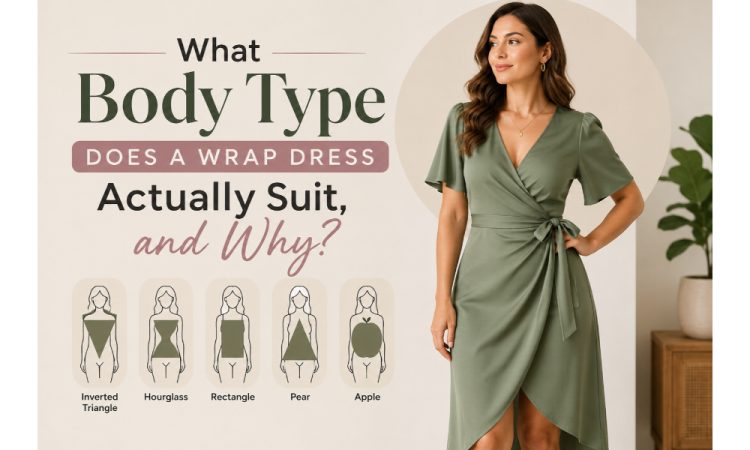
The honest answer is almost everyone, but the “why” differs by body shape:
- Hourglass — confirms what’s already there, nipping in at a natural waist without shapewear.
- Pear shape — the V-neck and defined bust balance visual weight upward while the skirt skims the hips.
- Apple shape — the diagonal wrap line creates a waist where a straight hemline wouldn’t.
- Rectangle/athletic — the self-tie waist manufactures curves a straight cut can’t fake.
- Petite frames — a knee-length or above-knee cut elongates the leg line far more than boxy styles.
| “The mechanism is consistent across body types: adjustable waist definition plus a lengthening V-neck. That’s why stylists reach for it as a near-universal recommendation.” |
Styling Tips
- Belt it slightly tighter than the self-tie for a sharper waist, or looser for a relaxed look.
- Layer a blazer over it for office wear without losing the shape underneath.
- Choose a self-tie (not a permanent faux-wrap) for day-to-day fit flexibility.
- Pair with pointed flats or block heels by day; strappy heels for evening.
- A small fashion-safety pin at the bust line fixes a gaping neckline instantly.
Seasonal Recommendations
- Spring/Summer — lightweight rayon, linen-blend, or crepe in florals or solid brights.
- Fall — ponte knit or midweight jersey, paired with boots and a leather jacket.
- Winter — long-sleeve wool-blend or heavier jersey as a base layer under a coat.
Fabric Comparisons
| Fabric | Drape | Best Season | Care Level |
| Silk | Excellent, fluid | Spring/Summer, Evening | High (dry clean) |
| Jersey knit | Good, clingy | Year-round | Easy (machine wash) |
| Rayon/Viscose | Very good | Spring/Summer | Moderate (hand wash) |
| Ponte knit | Structured | Fall/Winter | Easy (machine wash) |
| Wool blend | Structured, warm | Winter | Moderate (dry clean) |
Jersey and ponte knit are the most forgiving for beginners — they hold their shape, resist wrinkling, and don’t require special laundering.
Common Mistakes
- Sizing up for the wrap “just in case” — creates excess bulk instead of a clean tie.
- Ignoring the underlayer — a visible strap undercuts the polished look.
- Choosing overly slippery fabric first — satin and thin silk shift and gape more.
- Wearing it too loose at the waist — erases the entire point of the design.
- Skipping a length check when sitting — always sit down before buying.
Budget vs. Premium Options
- Budget ($30–$60): Jersey or rayon blends — good for testing the silhouette.
- Mid-range ($80–$160): Better fabric weight, interior snaps, refined prints.
- Premium ($250+): Designer labels with superior drape and lasting shape.
The main functional difference at higher price points isn’t just fabric — it’s the addition of interior snaps or hooks that keep the wrap secure through movement, which budget versions often skip.
Expert Fashion Advice
Stylists consistently recommend trying a wrap dress in a jersey or ponte fabric first, since these fabrics forgive minor fit issues and don’t require ironing. For work settings, choose a mid-calf or knee length with three-quarter sleeves; for evening, above-the-knee with a silk finish reads more elevated. If in doubt about waist placement, the tie should sit at your natural waist — the narrowest point of your torso — not your hips.
Another tip: buy true to your usual size rather than sizing down for a “snatched” look — the wrap closure already does the cinching. And when trying dresses on, always raise your arms and sit down before deciding — a dress that gaps during normal movement will gap all day.
FAQ
Does a wrap dress work for a plus-size figure?
Yes — the adjustable tie and V-neck are particularly effective for fuller figures because the fit isn’t fixed by a zipper; it moves with the body.
Can I wear a wrap dress if I have a short torso?
Yes, but look for a slightly higher waist tie placement to avoid visually shortening your midsection further.
How do I stop a wrap dress from gaping at the chest?
Choose a style with interior snaps, or add fashion tape or a safety pin at the bust point.
Is a wrap dress appropriate for the office?
Absolutely, especially in ponte knit or crepe with knee-length hems and structured sleeves.
What shoes pair best with a wrap dress?
Block heels or pointed flats for daytime; strappy sandals or heels for evening.